Picture a fourth grader with a backpack full of candy, doing deals between classes. That was me. I was good at it. By high school the product was parties, and the kid throwing them was collecting at the door. And somewhere in there, picture that same kid standing in a bookstore with no money in his pocket, sliding a business book under his jacket. Titles about the rich and how they got that way. I could not afford them, and I could not stop reading them. I am not proud of the method. I am still proud of the hunger.
The hunger was not the only thing that started early. Now picture the same kid, ten years old, maybe eleven, blackout drunk for the first time. Fifth grade. The drinking came with me from there, quieter some years and louder in others, for most of my life. I am telling you now because the rest of this only makes sense if you know it. Hold onto it. I will come back to it.
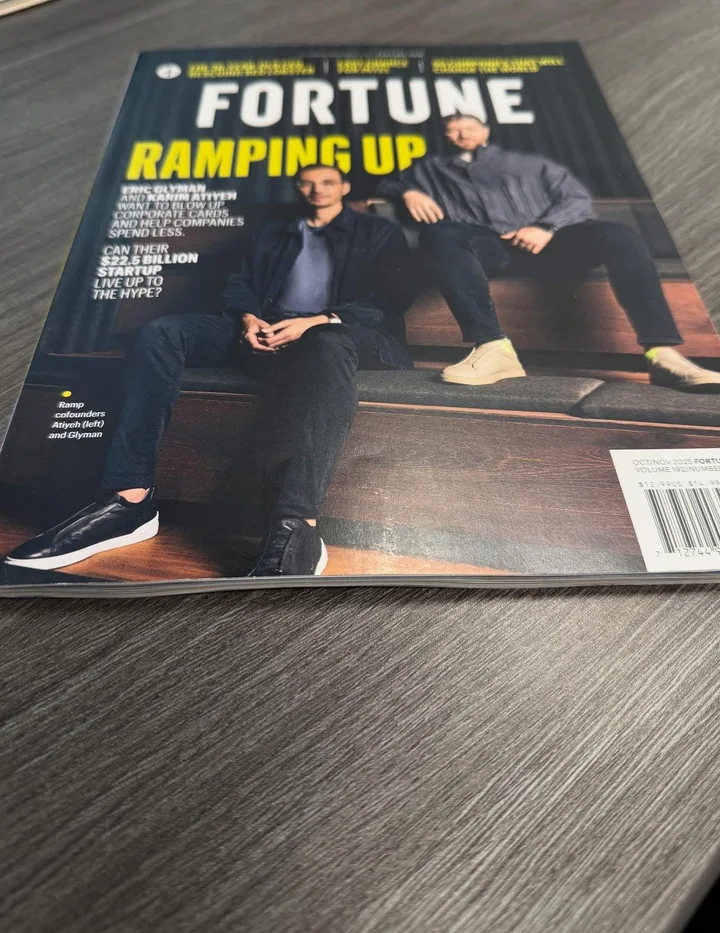
Then a door opened. My uncle came home from the Navy and put me in front of a keyboard, a kid learning C++ from a sailor in his first weeks back. Soon I was elbow deep in open computer cases, building machines with my own hands. Somewhere in there it clicked that Microsoft was not the computer. The machine and what ran on it were two different worlds, and you could learn both. So by the end of childhood the two loves were set: machines, and the mystery of business. How money actually worked, and what people went through to build something. In the late nineties that meant reading Fortune magazine as a high school kid, studying Warren Buffett and Michael Dell, and exploring the early internet in chat rooms on dial up. And it meant SimCity. I fell in love with building things on the computer, whole cities I would get lost in for hours. I am still doing that today, with CultureAI.
What stood in the way was everything I came from. Military and police, all the way down. Marines, officers, an airman, some of them both in one lifetime. Nobody had graduated from college. And my whole life, I heard no. Where I come from, believing you could become a successful business person did not sound like ambition. It sounded crazy. People said it out loud. The no outside had an ally inside me, a voice that kept saying you are not like them, you are meant for the military or the police. I broke a lot of rules, and I learned to make money young. But the voices stayed.
But one voice never joined the no. My mom always had grand visions for me, bigger than anything I dared to say out loud, and she gave me the brave confidence to believe I could become what I am now. Every no I ever heard had to get past her first.
So before this goes any further, an honest inventory, because a why should cost something to write. The writer. The thinker. The self doubter. The optimist. The lover of people. The doubt never fully left. I just stopped letting it drive.
So I did the only thing a kid like that can do. I fought the voices with geography. I moved from Los Angeles to New Hampshire for school, to be as physically close as I could get to Dartmouth, because I had started too late to ever qualify to get in. Three thousand miles from home, alone, not knowing one person. I wanted to give up more times than I can count. But I stayed. I could not have the dream, so I moved next door to it. That is who I am. That has always been who I am.
And that dream is not finished. Twenty plus years later, the life I built has opened the door I could only stand next to. I did the right things, and this time I can get in. One day I will hold that degree. The kid is still on his way.
The thirst never stopped. The early mornings never stopped. I am still compounding, still learning, still reading like the kid who could not afford the books. And still writing. In college I covered business for the school paper, The New Englander, because it was the only job that let me hold both loves at once. I never stopped doing that either. Today it is The Culture Lab, a monthly column in Forbes and Inc., and a few million people reading along on LinkedIn. Same hunger. Better byline.
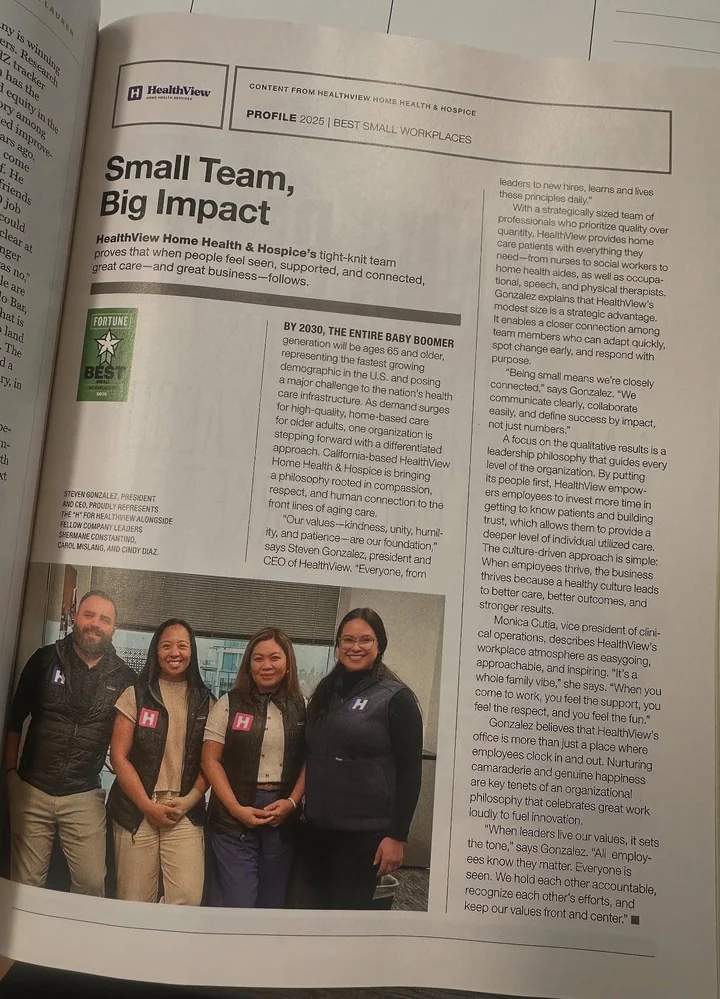
And Fortune itself came back around. The magazine I was reading in high school to study Buffett and Dell ranked HealthView, the company I run, number 16 on its list of the best small workplaces in America this year. Second year in a row on the list, up from 23. I used to read Fortune to learn how companies were built. Now it has our name in it.
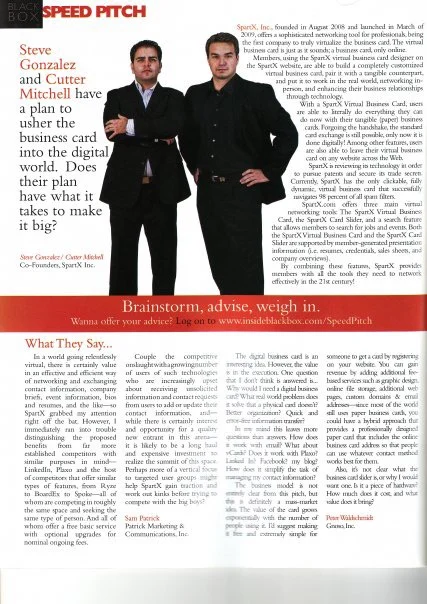
The selling never stopped either. In college I sold ads to the local ski resorts and bike parks for EdgeSports, our student run company built around skiing and mountain biking. EdgeSports printed my first business cards. I could not stop thinking that a card like that should live on the internet, and that thought became the college business plan.
And the bet paid. The college business plan became a real company called SpartX, a virtual business card in the MySpace era, and I built it at twenty two off a chess table in a spare bedroom. It got acquired. For the first time in his life, the kid who was told no had receipts. But receipts were not the education.
Then this industry handed me the education Dartmouth never could. Twice a week, somewhere in Southern California, someone on my team sits in a living room with a family that is running out of time. I have been near those rooms for twenty years, and I can report: nobody spends their last weeks talking about a promotion, a market, or an org chart. They talk about the people they loved and the time they traded away. Twenty years of hearing that reorders a man's math.
There is a famous novel about exactly that regret, and the man who wrote it died inside the same regret he warned the world about. I wrote a field note about him called Working Backwards, and it changed my mission. It changed more than my mission. Remember the fifth grade. About two years ago I stopped drinking, completely, after a lifetime of not being able to. Not because of anything dramatic that happened. Because I finally turned that lens on my own life and looked at it from the deathbed backwards, and from there, the drinking had no argument left.
I wanted to accomplish a lot. I still do. But the scoreboard moved. So has my faith in heaven. I believe this life is not the whole story, which makes how we treat people in this one matter more, not less. So yes, I am a man with regrets. The novel found me because I qualified. What changed is the direction. I am a man trying to minimize the regrets still in front of me now, so that when my funeral comes, the hall is full of people who loved me. That is the whole plan.
And I am a girl dad. So I live between two views. Behind me, the rooms where people run out of time and finally tell the truth. Ahead of me, my daughters, looking at everything still to come. I am sandwiched in the middle, between the end of life and the beginning of theirs, and that squeeze is the best pressure of my life. It is pressing me into being the best man I can manage, because one view shows me the cost of getting it wrong, and the other one is watching.
I never wore the uniform my family wore, and it was not for lack of trying. In 2001 I tried to join the Army. I was at MEPS in San Diego, the entrance processing station, with 9/11 playing on the TVs, and I was denied over an eye disease. I tried again with the Air Force reserve and did not get accepted there either. Part of my heart broke that I could not serve. But it never stopped me from serving in my way.
For a moment I thought the ballot might be the uniform. If I could not serve in fatigues, maybe I could serve by changing the things that needed changing. And New Hampshire is the one place in America where a college kid can test that idea face to face, because every four years the whole race comes through your town. So I joined the student senate. Then I took my New Englander notebook and interviewed every candidate running for president in 2004. All of them. A kid the Army had turned away, sitting across from the people asking to be its commander in chief. That same year I worked on a presidential campaign and saw it from the inside. What I learned is that politics was not going to be my career. But the citizenship stayed. To this day I am in Washington once or twice a year, walking the halls for home health and hospice, making the case for people who are running out of time to make it themselves. I still believe in the democracy system. I am very proud to be an American. I do my part.
This work is my uniform. Same instinct, different front line: show up for people on their hardest day and do the job right. And the standard is the one from my house, kindness, unity, humility, patience, and the family saying we live by: we endure. Easy is for other families. Enduring makes everything more valuable.
And under the family standard sits my own, four words that started as a mental exercise, something I would say to get myself through difficult stuff. Be cool. Be positive. Then it became a tweet, and the July 2009 one is the oldest receipt I can point to. Then a social good blog at becoolbepositive.com. Then shirts and hats, an actual company in Irvine, a community made to cure negativity, because I knew from the inside what negativity does to a kid. The original mission: to create a positive living experience for the planet and those that inhabit it. That domain is this site now. The creed came home. It is how I close everything I write, including this letter.
So here is the why, plainly. Healthy years are the only currency that matters, and I am spending my working life trying to buy people more of them. The method is companies that treat their own people the way we ask them to treat patients. The hope is people discovering their human potential along the way. And the work under all of it is on myself, in every area of being a man. If we get good enough at this, it may someday shrink demand for my own business.
That is ok. That was always the point. The kid who stole the books would not believe where this went. I am building it so he would be proud of how.
Be cool. Be positive.